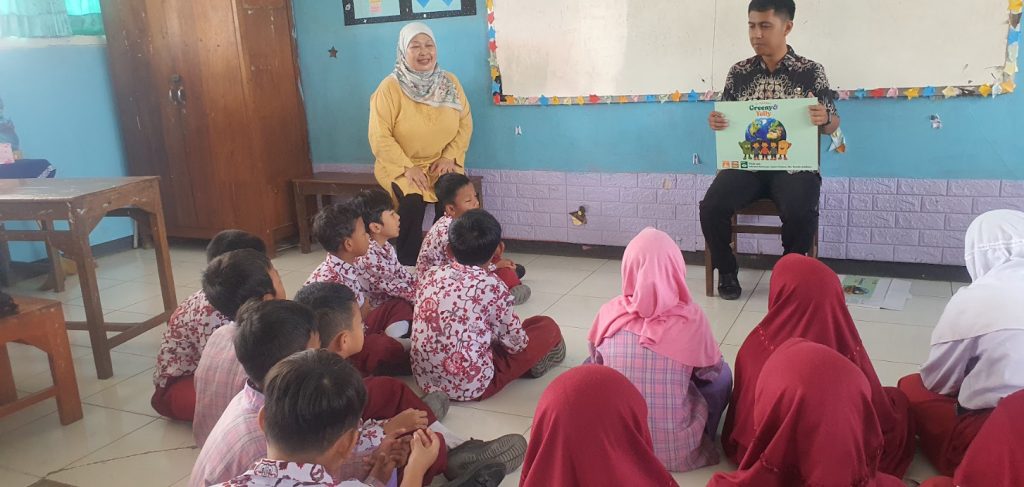


The Sastra Jepang Study Programme of Fakultas Ilmu Budaya, Universitas Jenderal Soedirman, together with the Department of Environmental Systems, Faculty of Environmental Engineering, University of Kitakyushu, Japan, and Universitas Pakuan, Bogor, held a workshop themed “Kamishibai: The Role of Media in Shaping Children’s Awareness of Eating Culture and Waste Management from a Japanese Cultural Perspective” on Monday – Wednesday, 22 – 24 September 2025. This activity was attended by 22 elementary schools in the South Purwokerto area, 11 school principals, and 50 elementary school teachers (Grade IV and V).
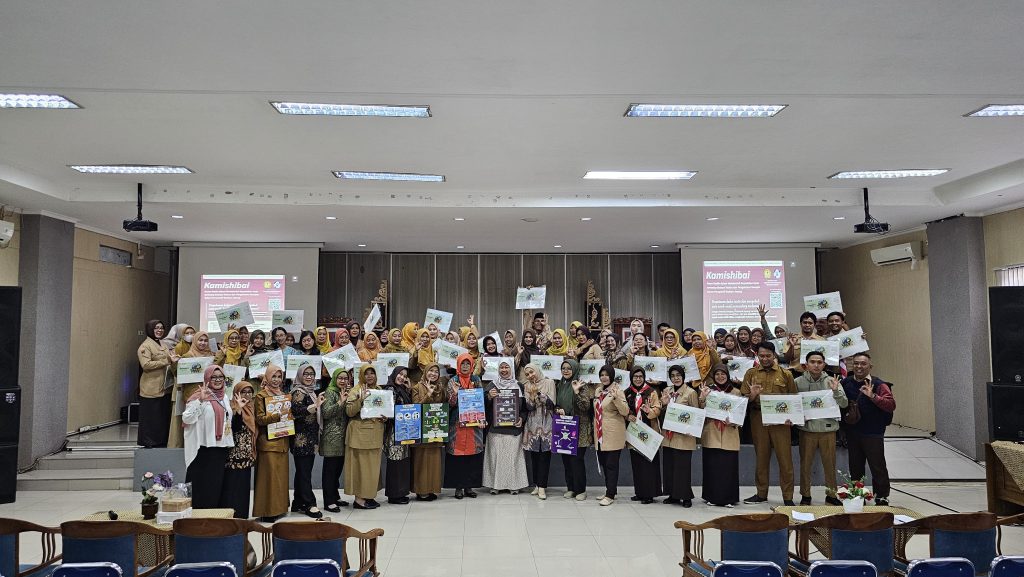
Dra. Suminah, M.Pd in her remarks stated that this activity is very useful for educators, especially in the cross-cultural domain. Kamishibai is expected to serve as an alternative medium for classroom learning. “We are very happy to be here, and at the same time we can learn Japanese…” she concluded her remarks by saying, “that is all from me, makoto ni arigatou gozaimashita,” which was enthusiastically received by the participants.
Prof. Ely Triasih Rahayu, in her opening address, stated that this activity is proof of the dedication of the lecturers of the Sastra Jepang Study Programme in building a culture of waste management to create a clean and comfortable Banyumas.
One of the workshop participants, Opsi Risky Andaru, M.Pd, who is also the Principal of SDN 1 Purwokerto Kulon, expressed that Kamishibai is an appropriate medium to be applied to elementary students because it consists of illustrations and a storytelling style that can attract students’ attention in class.
The main speaker, an environmental researcher from the University of Kitakyushu, Indriyani Rachman, Pd.D, stated that Kamishibai is a traditional Japanese medium preserved to this day. One characteristic feature of the stories conveyed through the Kamishibai medium is that they always have a happy ending, thus always bringing happiness and a positive spirit at the end of every story.
This workshop consisted of two main activities. The first day, held at Gedung Bambang lelono FIB Unsoed, invited participants to make Kamishibai presented by Nur Kamila Saldina, ST, as well as how to use Kamishibai delivered by Cincin Cintami, S.Pd; both speakers are postgraduate students at Universitas Pakuan, Bogor.
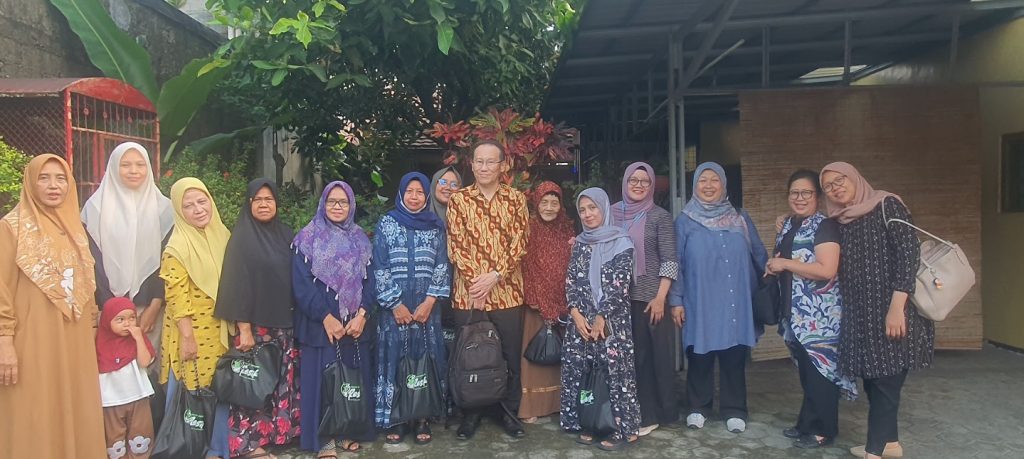
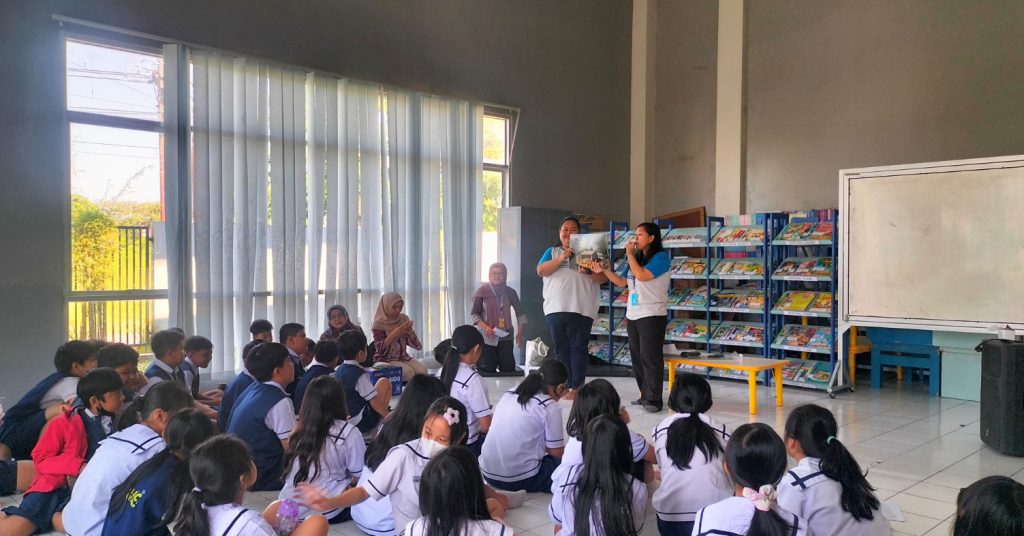
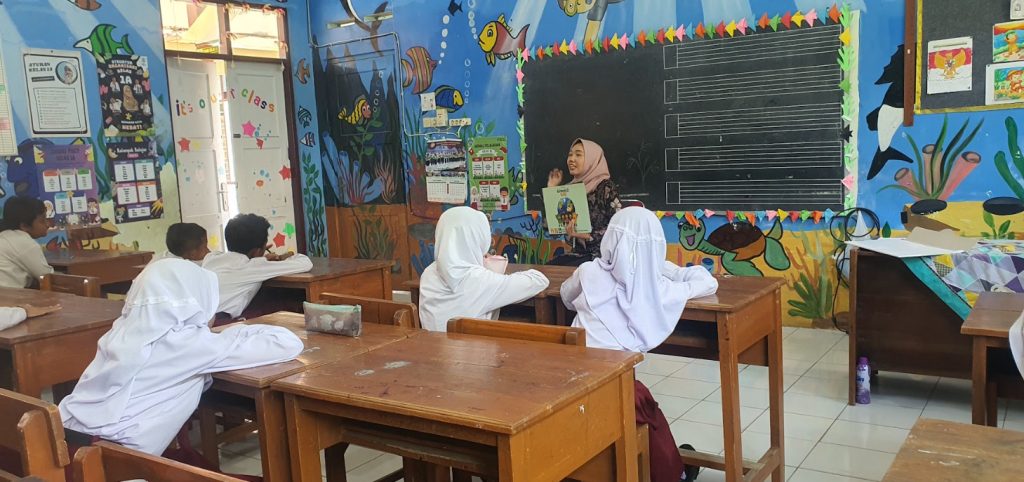
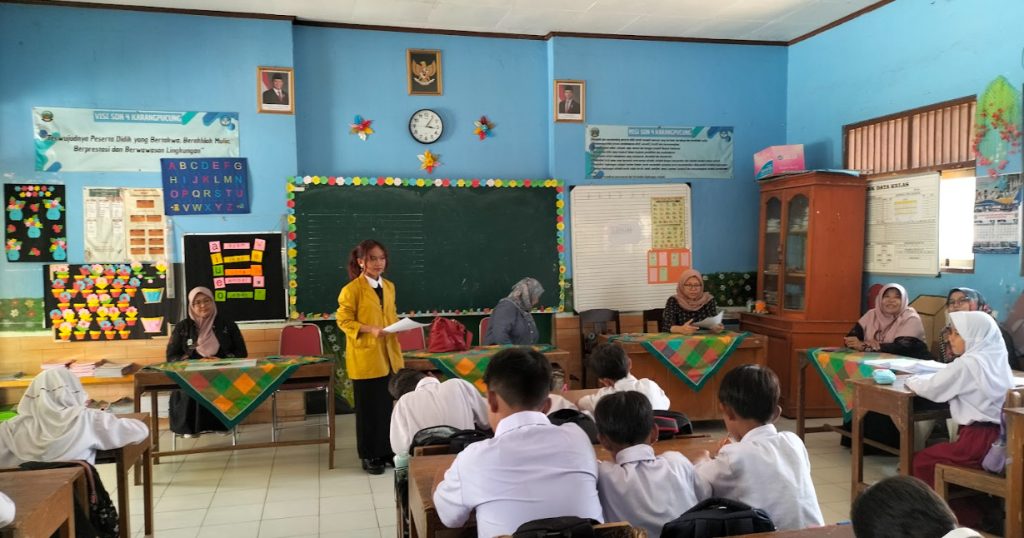
Furthermore, on the second and third days, the team monitored the implementation of using the Kamishibai media at 4 (four) selected elementary schools, namely SD Palm Kids, SDN 1 Teluk, SDN 4 Karang Pucung, and SDN 3 Purwokerto Kulon. In addition to visiting the schools, the Sastra Jepang community service team also visited a Dasawisma group (a neighborhood mothers’ group consisting of 10 households) in Kedungbanteng, Karangsalam Banyumas. Dr. Tribuana Sari, a lecturer in the Sastra Inggris Study Programme at FIB Unsoed who is also a member of the dawis group, stated that the women in her neighborhood are interested in learning how to manage waste better. “We understand that the Japanese nation is better in waste management, starting from how people understand feeling ‘ashamed’ if they dispose of garbage improperly.”