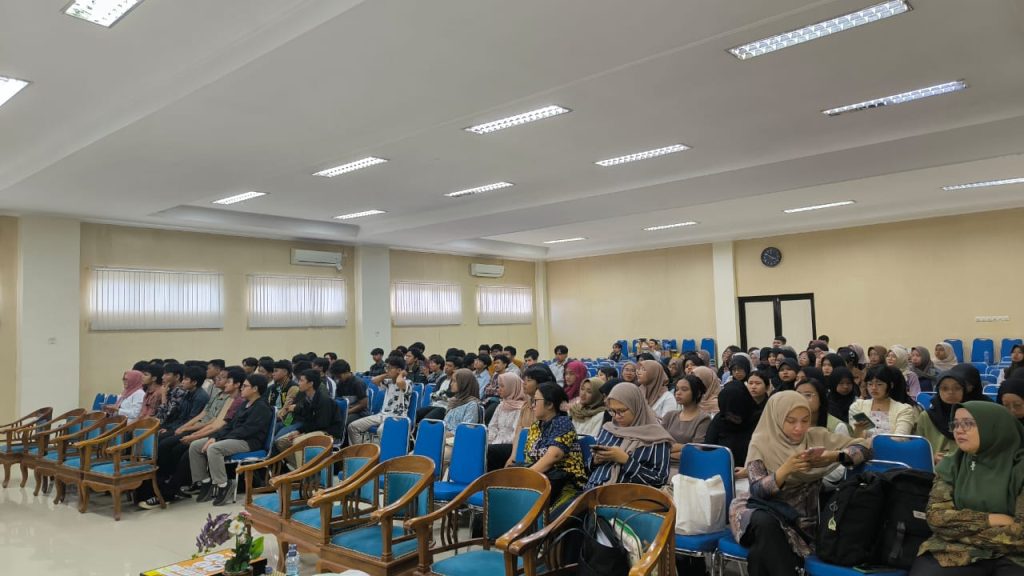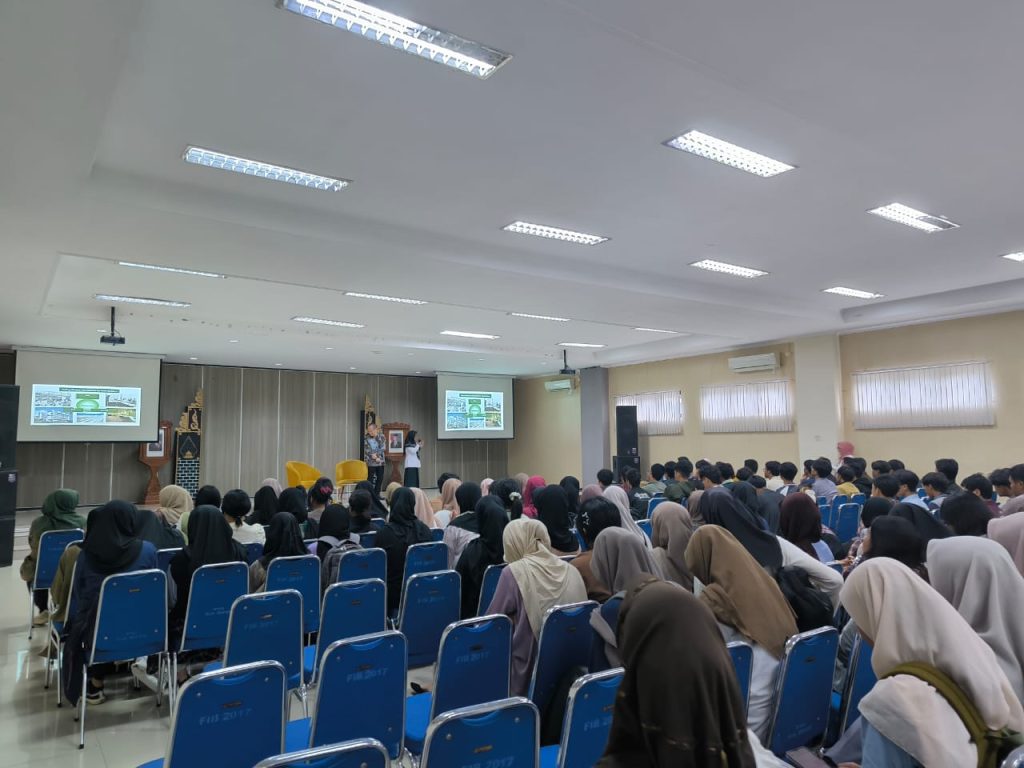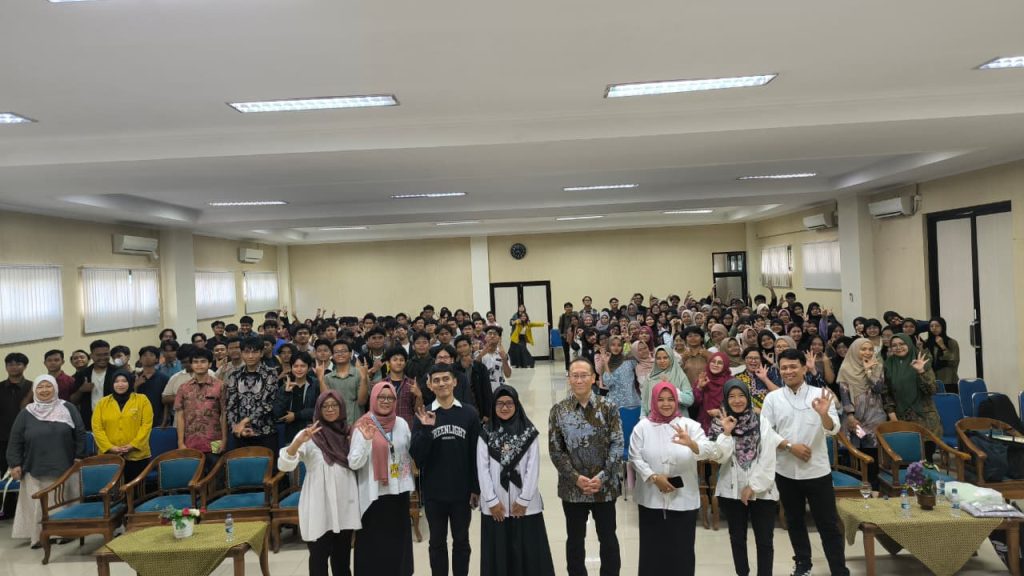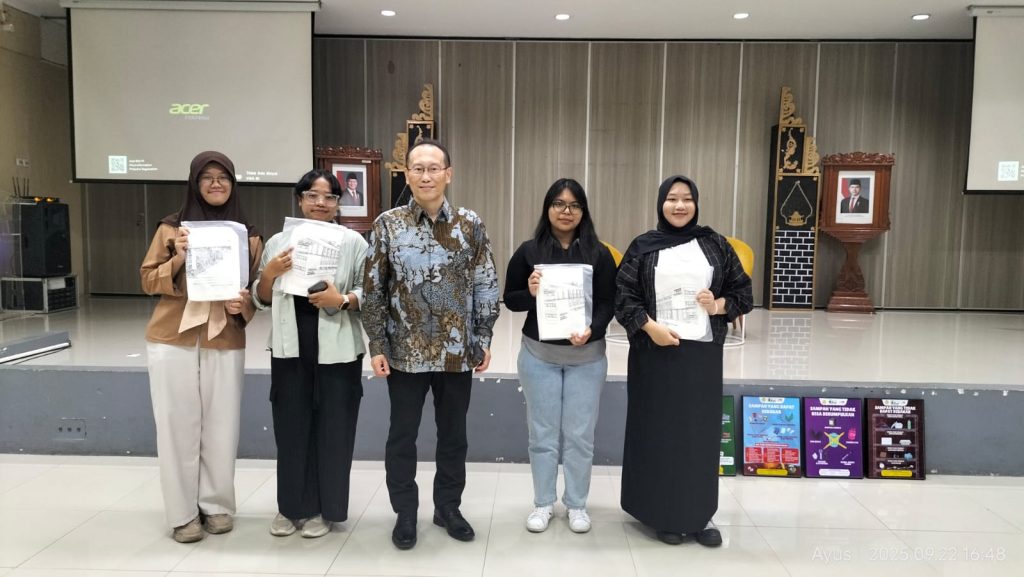


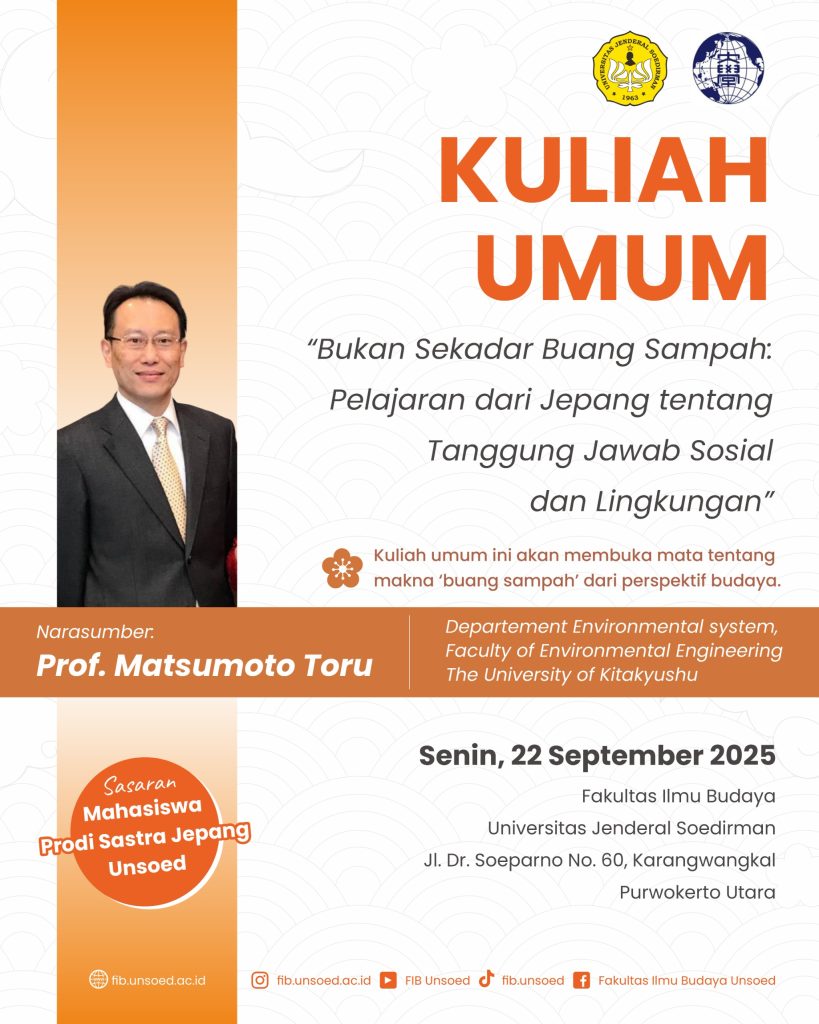
On Monday, 22 September 2025, the Sastra Jepang Study Programme held a guest lecture by inviting Prof. Matsumoto Toru from the University of Kitakyushu, Japan. The theme carried in this lecture was “Kitakyushu Environmental Friendly City”.
The material was delivered in 4 (four) main themes related to Kitakyushu City and its connection to environmental conservation, starting from a presentation on the history of Kitakyushu City, waste management, to cultural festivals and the beauty of Kitakyushu City today. Kitakyushu City is an industrial city that once experienced severe pollution that harmed the environment and human health (1920-1960). An environmental movement was created through collaboration between the community, industry players, and the government, including activities such as monitoring companies, collaborating with university researchers, using anti-pollution equipment, and establishing waste treatment and monitoring facilities. This collaboration brought about significant environmental changes in the 1990s.
Furthermore, Prof Matsumoto also presented on domestic (household) waste management in Kitakyushu City. He explained how waste is sorted, starting from cans, plastic from beverage bottles, plastic from food packaging, to food waste. Kitakyushu City has around 8,000 waste collection points (stations). Each station serves about 50 households. Each type of waste has its own separate processing facility.
“We are striving to achieve zero food loss. Food consumes energy and emits carbon dioxide at all stages of production, transportation, storage, processing, and consumption. More food waste means more wasted energy. Carbon dioxide is also generated when food is discarded. At the Eco Life stage, we will encourage the reduction of food loss and work to reuse food waste generated in the culinary sector as compost,” stated Prof Matsumoto regarding food waste.
Several actions taken in connection with environmental education in Kitakyushu include, for instance, teaching children about energy use in toy cars, reusing newspapers for shopping bags, making compost from food scraps, utilizing wild plants as indoor decorations, and teaching elementary school students to protect river water alongside simple wastewater filtration techniques. Prof Matsumoto emphasized the importance of loving the earth through the awareness to reduce waste.